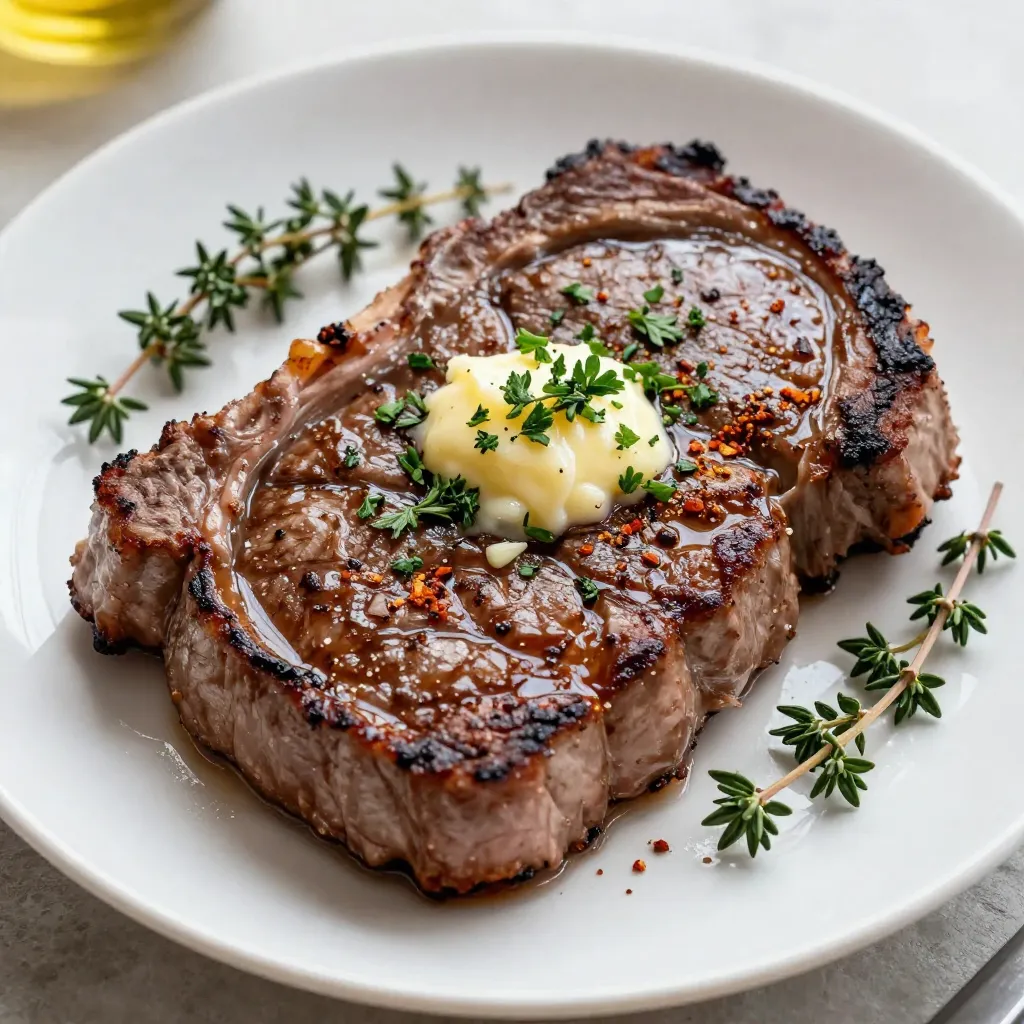
Are you ready to elevate your steak game? Let me introduce you to Garlic Herb Butter Steak! This dish is easy to make and packed with flavor. With just a few simple ingredients, you’ll create a juicy, mouth-watering steak that’s perfect for any occasion. Follow my step-by-step guide and impress your friends and family with your cooking skills. Let’s dive into the juicy details of this fantastic dish!
Why I Love This Recipe
- Deliciously Flavorful: The combination of garlic and fresh herbs in the butter elevates the ribeye steaks, creating a mouthwatering experience with every bite.
- Perfectly Cooked: Allowing the steaks to reach room temperature before cooking ensures they cook evenly, resulting in a juicy and tender steak.
- Easy to Make: This recipe is straightforward, making it accessible for both seasoned cooks and beginners looking to impress with a gourmet meal.
- Impressive Presentation: Garnishing with fresh thyme sprigs adds a touch of elegance, making this dish perfect for special occasions or a cozy dinner at home.
Ingredients
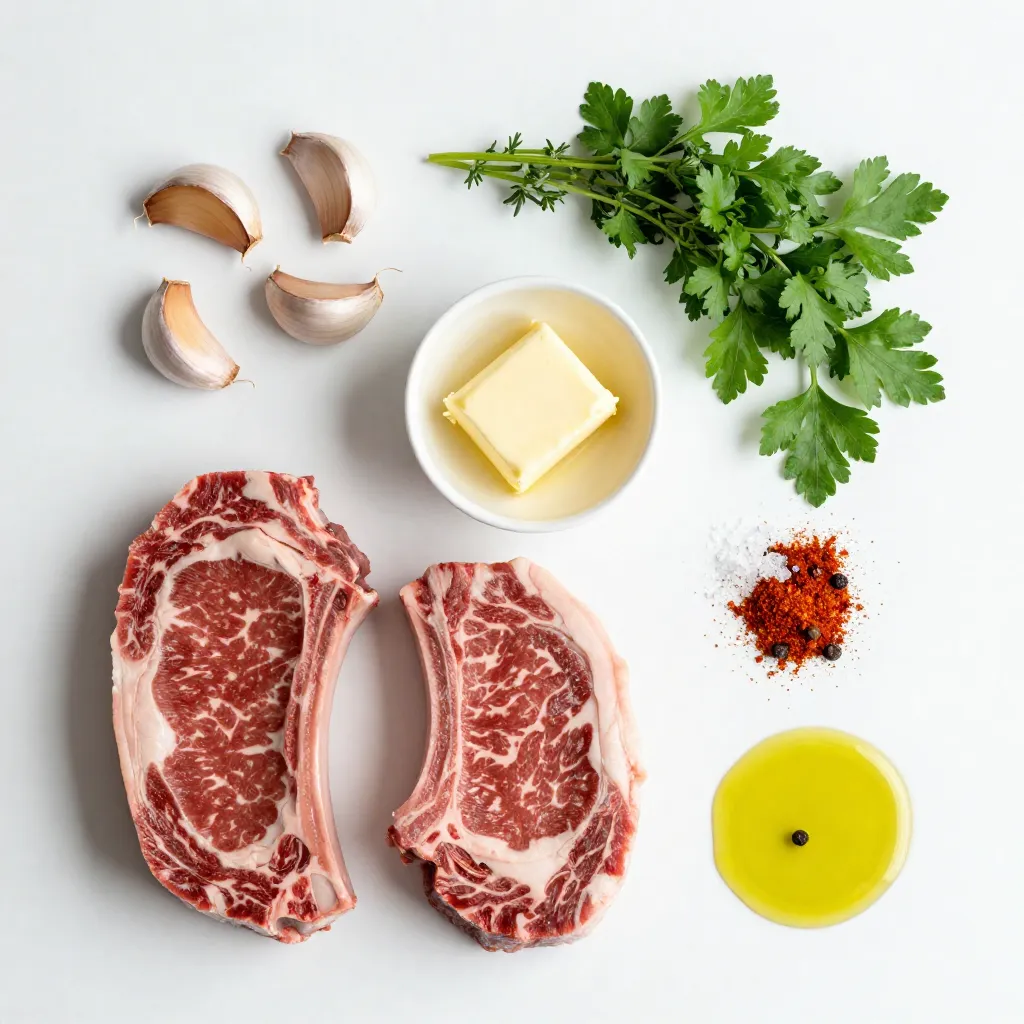
List of Ingredients
– 2 ribeye steaks (about 1 inch thick)
– 4 tablespoons unsalted butter, softened
– 4 cloves garlic, finely minced
– 2 tablespoons fresh parsley, finely chopped
– 1 tablespoon fresh thyme, finely chopped
– 1 teaspoon smoked paprika
– Salt and freshly ground black pepper to taste
– Olive oil for cooking
– Fresh thyme sprigs for garnish
To create a tasty Garlic Herb Butter Steak, you need fresh ingredients. Ribeye steaks are perfect for this dish. They have good marbling and rich flavor. Use steaks that are about 1 inch thick for the best results.
Next, garlic and herbs bring the dish to life. You need fresh garlic, parsley, and thyme. Their flavors blend well with the butter. This garlic herb butter adds a lot of taste and makes the steak juicy.
You also need a few seasonings. Smoked paprika adds a nice depth. Salt and black pepper will enhance the steak’s natural flavors. Olive oil is used for cooking. It helps to sear the steak perfectly and adds a hint of flavor.
With these ingredients, you can make a simple yet impressive meal. The combination of rich butter, fresh herbs, and tender steak will wow anyone at your table. Enjoy cooking!
Step-by-Step Instructions
Preparing the Steaks
To start, take the ribeye steaks out of the fridge. Let them sit for about 30 minutes. This helps them cook evenly. Next, pat the steaks dry with paper towels. This step removes excess moisture. Now, season both sides with salt, black pepper, and smoked paprika. Make sure to cover every bit for great flavor.
Making the Garlic Herb Butter
In a small bowl, mix the softened butter, minced garlic, chopped parsley, and thyme. Stir until the herbs blend well with the butter. You want a smooth consistency. If the butter is too hard, let it sit out a bit longer. This will make it easier to mix.
Searing the Steaks
Heat a good splash of olive oil in a large skillet over medium-high heat. Wait until the oil shimmers and is hot. Carefully place the steaks in the skillet, laying them away from you. This keeps you safe from splatter. Don’t move the steaks for about 4-5 minutes. This helps form a nice crust.
Flipping and Adding Butter
Once the steaks have a good sear, use tongs to flip them over. Add half of the garlic herb butter to the skillet right after flipping. Keep cooking for another 4-5 minutes for medium-rare. While they cook, tilt the skillet slightly. Use a spoon to baste the steaks with the melted butter. This adds extra flavor and juiciness.
Resting the Steaks
After cooking, remove the steaks from the skillet. Place them on a plate and top with the remaining garlic herb butter. Let the steaks rest for 5-10 minutes. Resting is key for keeping the juices inside. This makes the steak tender and tasty.
Serving Suggestions
When you’re ready to serve, slice the steaks against the grain. This helps make each bite tender. Drizzle any leftover garlic herb butter over the slices. For a nice touch, add fresh thyme sprigs as a garnish. Enjoy your flavorful dish!
Tips & Tricks
Best Practices for Cooking Steak
Choosing the right cut
For this dish, I recommend ribeye steaks. They are tender and full of flavor. Look for steaks that are about 1 inch thick. This thickness helps cook the steak evenly.
Proper seasoning techniques
Season your steaks generously. Use salt, black pepper, and smoked paprika. Remember to season both sides. This step adds depth to the flavor. Pat the steaks dry first. This helps create a nice crust when cooking.
Achieving Desired Doneness
Internal temperature guide
To get perfect doneness, use a meat thermometer. Aim for 130°F for medium-rare. For medium, aim for 140°F. Cooking times may vary, so always check.
Testing doneness with touch
You can also test doneness by touch. Press the steak with your finger. A firm feel means it’s well done, while a soft feel means it’s rare. With practice, you’ll master this skill.
Flavor Enhancements
Additional spices to try
Experiment with spices like cumin or oregano. These can add unique flavors to your steak. Try garlic powder or onion powder for extra depth.
Alternative butter mix-ins
Mix in different herbs for your butter. Consider rosemary or chives for a twist. You can also add lemon zest for a bright flavor. This will elevate your garlic herb butter even more.
Pro Tips
- Room Temperature Steaks: Allow your steaks to come to room temperature before cooking. This helps them cook evenly and achieve a perfect sear.
- Butter Basting: While cooking, baste the steaks with the melted garlic herb butter. This not only enhances flavor but also helps keep the meat moist and juicy.
- Resting Period: Don’t skip the resting time after cooking! Letting the steaks rest allows the juices to redistribute, ensuring each bite is tender and flavorful.
- Use a Meat Thermometer: For perfect doneness, use a meat thermometer. Aim for 130°F for medium-rare to avoid overcooking your steaks.
Variations
Different Cuts of Steak
You can use many cuts for this dish. Ribeye is great, but try sirloin or filet mignon too. These cuts have different flavors and textures.
– Recommendations for alternatives:
– Sirloin: Leaner and still tender.
– Filet mignon: Very tender, melts in your mouth.
– Cooking time adjustments:
– Sirloin: Cook for about 3-4 minutes each side for medium-rare.
– Filet mignon: Cook for about 4-5 minutes each side for medium-rare.
Herb Butter Variations
You can mix up the herb butter to fit your taste. Fresh herbs add a lot of flavor.
– Different herb combinations:
– Basil and oregano for a Mediterranean twist.
– Rosemary and sage for a hearty flavor.
– Adding other flavor elements:
– Citrus zest, like lemon or orange, brightens the butter.
– A splash of Worcestershire sauce gives a savory kick.
Cooking Methods
You can choose how to cook your steak based on your equipment and taste.
– Grilling vs. pan-searing:
– Grilling adds a smoky flavor and beautiful grill marks.
– Pan-searing gives a nice crust and keeps juices inside.
– Oven finishing techniques:
– After searing, place the steak in the oven at 400°F until done.
– This method helps cook the steak evenly and retains moisture.
Experiment with these variations to make the dish your own!
Storage Info
Refrigeration Guidelines
To keep your Garlic Herb Butter Steak fresh, store leftovers in an airtight container. This helps to lock in flavor and moisture. Place the container in the fridge as soon as possible. The steak will stay good for about 3 to 4 days. If you notice any off smells or changes in color, it’s best to throw it away.
Freezing Instructions
If you want to save the steak for later, freezing is a great option. Let the steak cool completely before wrapping it tightly in plastic wrap. You can also use a freezer bag. For the garlic herb butter, spoon it into a small container or wrap it in plastic wrap. This keeps the flavors intact.
When it comes time to eat, thaw the steak overnight in the fridge. For reheating, place the steak in a skillet over low heat. This warms it evenly without losing moisture. You can also add a little broth or water to the skillet to help keep it juicy. Enjoy your meal just like the first time!
FAQs
How can I make Garlic Herb Butter Steak more flavorful?
To boost flavor, add more herbs like rosemary or oregano. Try different spices, too. A splash of red wine or balsamic vinegar can add a nice depth. You can also let the steaks marinate in the garlic butter for an hour before cooking. This will help the flavors seep into the meat.
What is the best steak cut for this recipe?
Ribeye steaks are my top choice for this recipe. They have great marbling, which adds flavor and juiciness. Other good options include sirloin or filet mignon. Each cut offers a unique texture and taste, so choose what you enjoy most.
Can I use dried herbs instead of fresh?
Yes, you can use dried herbs, but fresh herbs taste better. If using dried herbs, use about one-third of the amount. Dried herbs are more potent, so adjust to your taste. Mix them into the butter just as you would with fresh ones.
How long should I let the steak rest after cooking?
Let the steak rest for 5-10 minutes after cooking. This step lets the juices settle and keeps the meat moist. If you cut into it right away, those juices will run out, and the steak will be dry.
What’s the ideal cooking temperature for a medium-rare steak?
The ideal temperature for medium-rare steak is 130°F. Use a meat thermometer to check the temp. Insert it into the thickest part of the steak for an accurate reading. Remember, the steak will continue to cook a bit while resting.
Following these steps, you can cook delicious garlic herb butter steaks. Start with quality ribeye and fresh ingredients. Mastering the sear and butter basting is key to great flavor. Remember to let your steaks rest for better taste and texture.
Experiment with different cuts and herb blends to find your favorite. Store leftovers properly for later enjoyment. With practice, you’ll impress everyone at your table. Cooking steak can be easy and fun. Enjoy your culinary journey and savor every bit