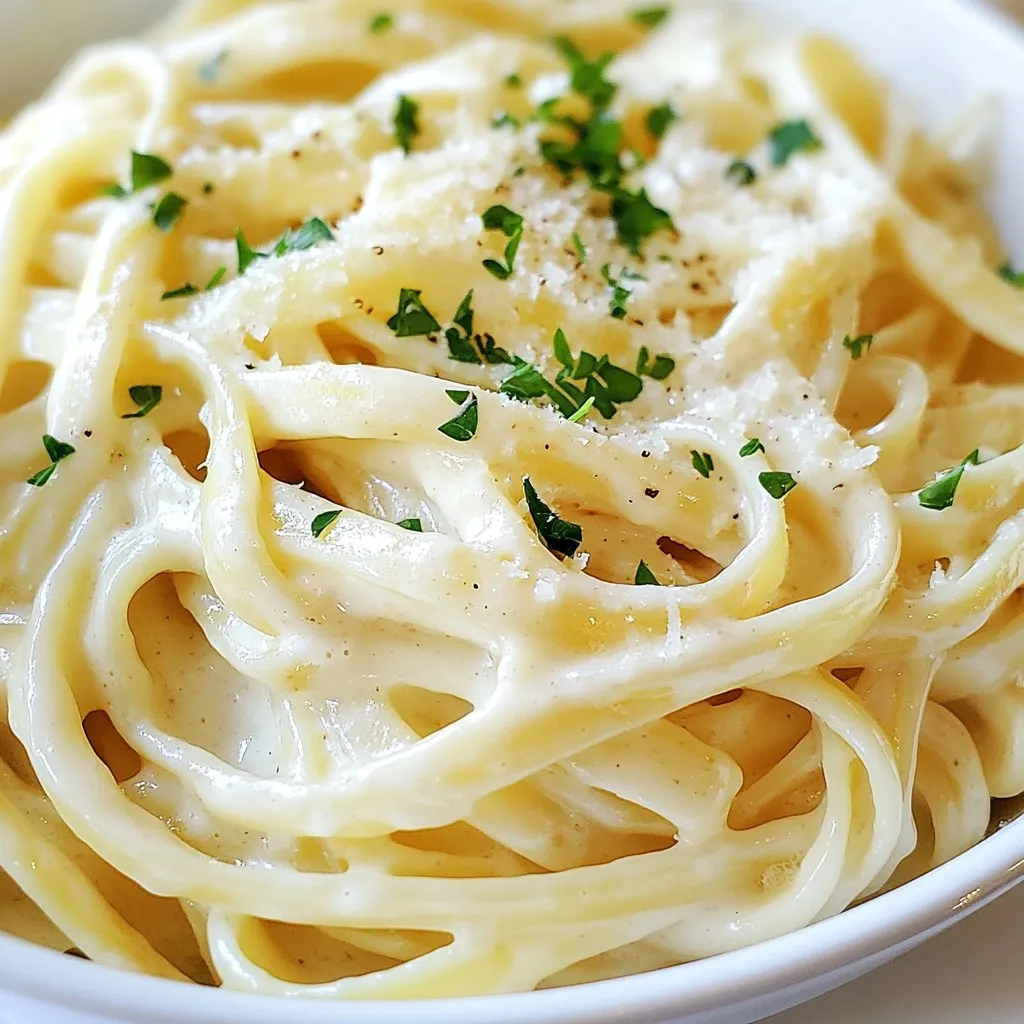
If you’re craving a dish that’s rich, creamy, and bursting with flavor, you’ve come to the right place! My Roasted Garlic Alfredo Pasta will become a go-to favorite. With just a few simple ingredients like fettuccine, roasted garlic, and Parmesan cheese, you can whip up this delightful meal in no time. Get ready to impress your family or enjoy a comforting dinner for one. Let’s dive into the creamy goodness of this recipe!
Why I Love This Recipe
- Indulgent Creaminess: This Alfredo pasta has a rich and velvety texture that makes every bite feel like a luxurious treat.
- Garlic Goodness: The roasted garlic adds a sweet, mellow flavor that elevates the dish beyond your typical pasta.
- Quick and Easy: In just 50 minutes, you can whip up a restaurant-quality meal that is perfect for any occasion.
- Customizable Delight: This recipe allows for endless variations—add veggies, proteins, or your favorite herbs to make it your own!
Ingredients
Main Ingredients
– 12 oz fettuccine pasta
– 1 whole bulb of garlic
– 4 tablespoons unsalted butter
– 2 cups heavy cream
– 1 cup freshly grated Parmesan cheese
Optional Ingredients
– 1 teaspoon garlic powder
– Fresh parsley for garnish
– Salt and black pepper to taste
Equipment Needed
– Oven for roasting garlic
– Large pot for cooking pasta
– Skillet for sauce preparation
– Whisk and mixing tools
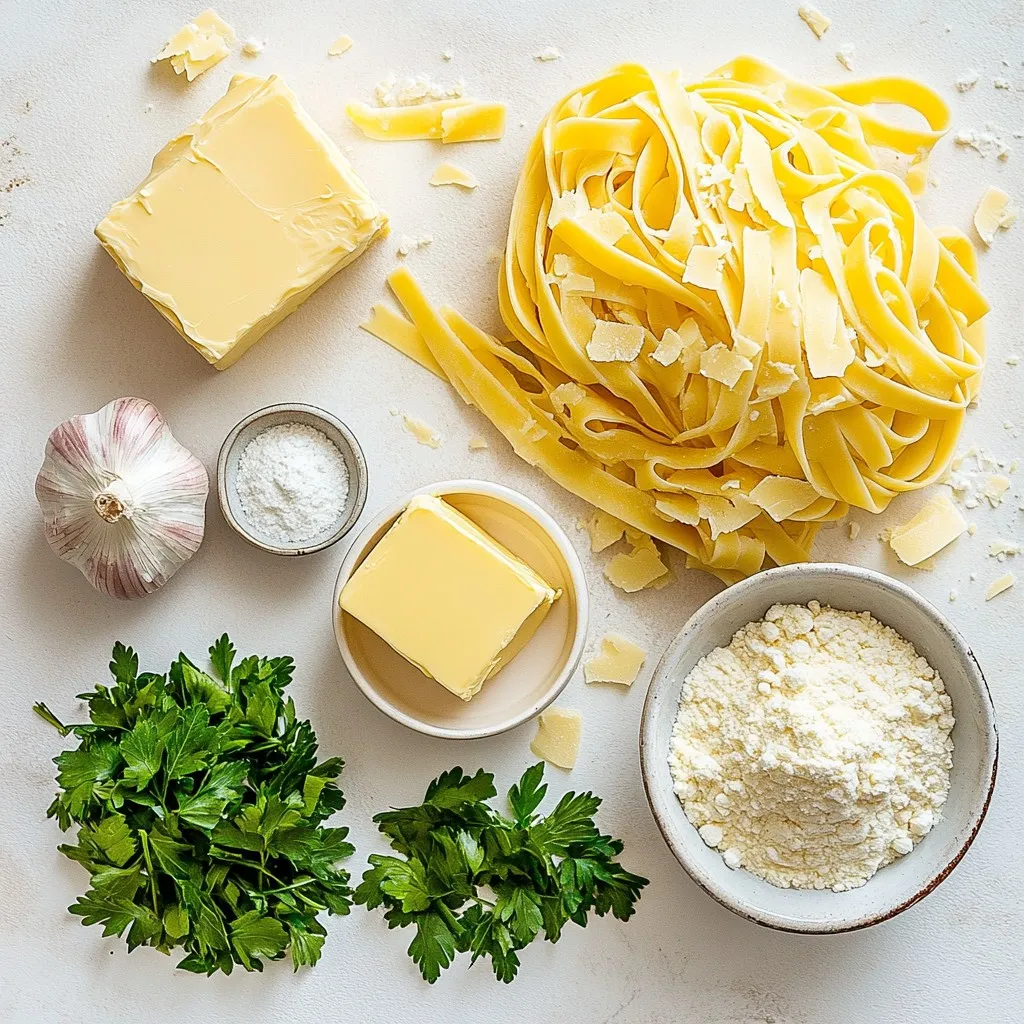
When making Roasted Garlic Alfredo Pasta, the right ingredients make a big difference. Start with fettuccine pasta. This pasta’s wide shape holds the creamy sauce well. Next, you need a whole bulb of garlic. Roasting it brings out a sweet, rich flavor.
Unsalted butter is key for the sauce. It gives a rich base without added salt. Heavy cream adds the creaminess you crave. Freshly grated Parmesan cheese brings a sharp, nutty taste. If you want a bit more garlic flavor, add garlic powder.
You can also use fresh parsley. This will brighten your dish with color and flavor. Finally, don’t forget salt and black pepper to enhance every bite.
For equipment, you will need an oven to roast the garlic. A large pot is essential for cooking the fettuccine. A skillet is perfect for making the sauce. Keep a whisk and some mixing tools handy. They help you create a smooth, creamy sauce.
Step-by-Step Instructions
Preparing the Roasted Garlic
1. Preheat your oven to 400°F (200°C).
2. Slice the top off the garlic bulb. This will help it roast evenly.
3. Drizzle about 1 teaspoon of olive oil on the exposed cloves.
4. Wrap the bulb in aluminum foil and place it in the oven.
5. Roast for 30-35 minutes. The garlic should be soft and smell sweet.
6. Let it cool for a few minutes. Squeeze the roasted cloves into a bowl.
7. Use a fork to mash the cloves into a smooth paste.
Cooking the Fettuccine
1. In a large pot, bring salted water to a rolling boil.
2. Add the fettuccine pasta to the boiling water.
3. Cook according to the package instructions until al dente.
4. Before draining, reserve about 1 cup of the pasta cooking water.
5. Drain the pasta and set it aside to rest.
Making the Alfredo Sauce
1. In a large skillet, melt the unsalted butter over medium heat.
2. Once melted, add the all-purpose flour. Whisk for 1-2 minutes until golden.
3. Gradually pour in the heavy cream, whisking to avoid lumps.
4. Mix in the mashed roasted garlic and garlic powder.
5. Cook for 3-4 minutes, stirring often, until the sauce thickens.
Combining Pasta and Sauce
1. Add the drained fettuccine to the skillet with the Alfredo sauce.
2. Toss the pasta gently until each strand is coated in the creamy sauce.
Serving Suggestions
1. Serve the pasta immediately in large, warmed bowls.
2. Garnish with extra Parmesan cheese and parsley.
3. Drizzle with olive oil for a rich finish. Adjust the seasoning as needed.
Tips & Tricks
Perfecting the Sauce
To make the sauce just right, use pasta water. This water is starchy and helps the sauce stick. After cooking the pasta, save about one cup of the water. If your sauce is too thick, add a bit of this water. Stir it in slowly until you reach the perfect creaminess.
Fresh ingredients boost flavor. Use fresh garlic and good-quality Parmesan cheese. These add depth and richness to your sauce. When you use fresh items, your dish tastes better, and every bite feels special.
Roasting Garlic Alternatives
If you’re short on time, you can use store-bought garlic paste. It’s a quick fix and still adds great flavor. Just measure out one tablespoon for each clove you would normally use.
Another option is roasted garlic powder. This can work if you want a hint of garlic without the fuss of roasting. Use about one teaspoon to match the flavor of fresh roasted garlic.
Cooking Pasta Al Dente
Cooking pasta al dente means it’s firm to the bite. Follow the package instructions carefully. Usually, this means cooking for 8-12 minutes. Check it a minute or two before the time ends.
Look for a slight firmness in the center. If the pasta feels soft all the way through, it’s overcooked. Al dente pasta will hold its shape and soak up the sauce beautifully.
Pro Tips
- Roasting Garlic Perfectly: Make sure to wrap the garlic tightly in foil to trap steam, which helps it roast evenly and enhances its sweetness.
- Choosing the Right Pasta: Fettuccine is ideal for Alfredo, but you can substitute with other pasta types like linguine or penne for a different texture.
- Adjusting Sauce Thickness: If the sauce becomes too thick, gradually add reserved pasta water until you reach your desired consistency.
- Garnishing for Flavor: A drizzle of high-quality olive oil and fresh parsley not only adds color but also enhances the dish’s flavor profile.
Variations
Protein Additions
You can boost Roasted Garlic Alfredo Pasta with protein. Chicken and shrimp work great. Simply cook them in the skillet before adding the sauce. This makes the dish heartier and adds flavor.
For a vegetarian twist, use mushrooms or spinach. Sauté them in the butter before mixing in the sauce. They add texture and richness without meat.
Dietary Modifications
If you need gluten-free options, choose gluten-free pasta. Many brands offer great alternatives that cook well. Look for those made from rice or quinoa.
For a dairy-free version, use coconut cream or almond milk. These substitutes keep the creaminess while being kind to those with dairy issues. You can also find dairy-free cheese to mix into the sauce.
Flavor Enhancements
To elevate the dish, add herbs like thyme or basil. Fresh herbs bring a bright flavor that complements the garlic. Chop them finely and mix them in before serving.
If you like a bit of heat, sprinkle red pepper flakes into the sauce. Start small and adjust to your taste. This adds a nice kick, making the dish even more exciting.
Storage Info
Refrigeration Guidelines
To store leftovers, let the Alfredo pasta cool down. Place it in an airtight container. I recommend using glass or BPA-free plastic containers. This keeps the pasta fresh for up to three days. Make sure to seal it well to prevent any air from getting in.
Reheating Tips
The best way to reheat pasta is on the stove. Add a splash of water or cream to help the sauce stay creamy. Heat it over medium-low heat, stirring gently. This prevents the sauce from separating. You can also use a microwave. Heat in short bursts, stirring in between, until warm.
Freezer Instructions
You can freeze your Alfredo pasta for later use. Let it cool completely, then place it in a freezer-safe container. It stays good for about three months. To thaw, move it to the fridge overnight. Reheat it on the stove or in the microwave, adding a bit of cream or water to keep it creamy.
FAQs
How can I make my Alfredo sauce thicker?
To thicken your Alfredo sauce, you have some easy options. First, you can add more flour. After melting the butter, whisk in an extra tablespoon of flour. Cook it longer to get a rich flavor. Second, let the sauce simmer longer. The heat will help it reduce and thicken. Lastly, use less cream or add more cheese. Both will make the sauce creamy and thick.
Can I use other types of cheese in this recipe?
Yes, you can switch up the cheese! Try using Gruyère or Fontina for a unique taste. Both melt well and add a nice flavor. You can also mix in some mozzarella for extra stretch. Just remember, different cheeses can change the sauce’s taste. Feel free to experiment!
How long can I store leftover Roasted Garlic Alfredo Pasta?
You can keep leftover Roasted Garlic Alfredo Pasta in the fridge for about three to four days. Store it in an airtight container to keep it fresh. If you want to save it longer, freeze it. Frozen pasta lasts for about two months. Just make sure to let it cool before storing.
What is the best way to reheat Alfredo pasta without drying it out?
To reheat Alfredo pasta, use low heat on the stove. Add a splash of milk or cream to keep it creamy. Stir often to prevent sticking. You can also microwave it in short bursts. Cover it to keep moisture in. This way, your pasta stays delicious and creamy!
You can enjoy making Roasted Garlic Alfredo Pasta at home using simple steps. We covered the main ingredients you need, along with helpful tools. The making of the rich sauce and perfect pasta was thoroughly explained. Finally, I shared tips for variations and storage. With practice, you’ll master this dish and impress others. Enjoy your delicious homemade past
<!-- /wp:freefo