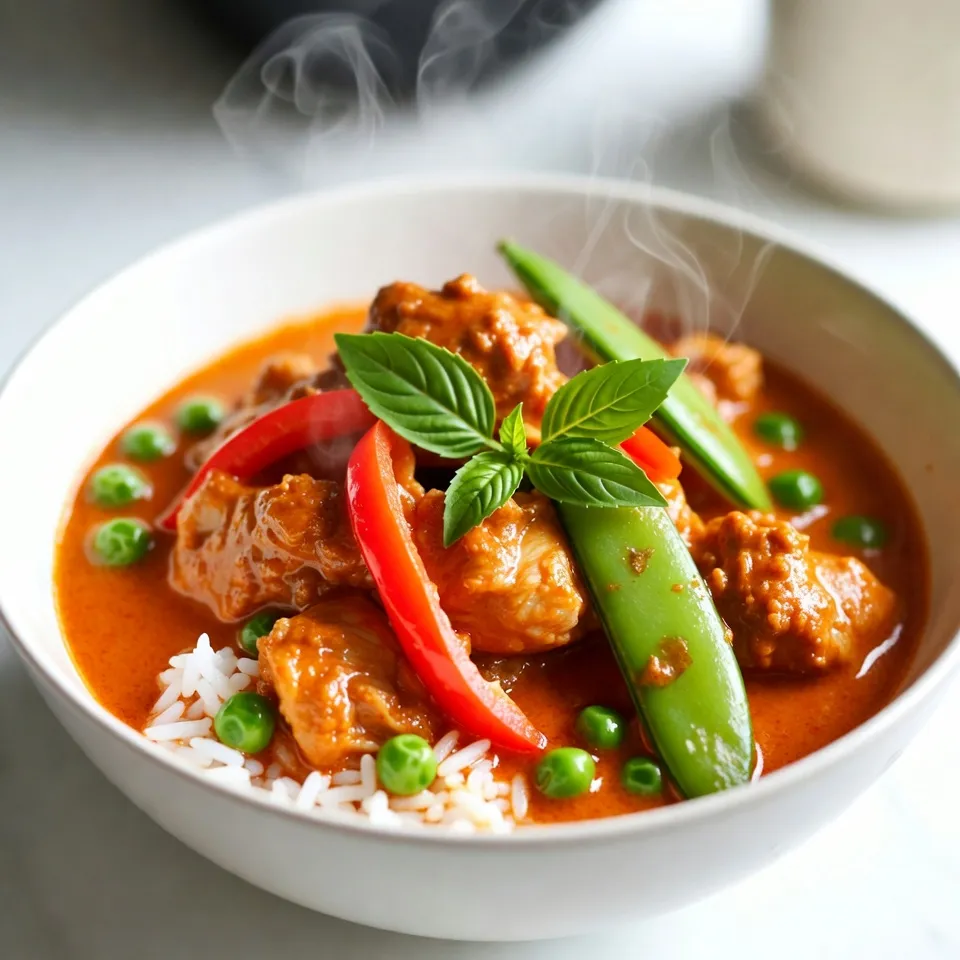
If you’re looking for a dish that’s both easy and full of flavor, you’ve found it! Thai Coconut Curry Chicken combines tender chicken with creamy coconut milk and vibrant vegetables. This recipe is simple for any cook and sure to impress your family or guests. Join me as we make a delightful meal that brings the taste of Thailand to your kitchen. Let’s dive into this creamy, savory dish together!
Why I Love This Recipe
- Bold Flavors: This Thai Coconut Curry Chicken is bursting with bold and aromatic flavors that transport you straight to Thailand with every bite.
- Quick and Easy: With a prep time of just 15 minutes, this recipe is perfect for busy weeknights when you want a delicious meal without the hassle.
- Healthy Ingredients: Made with fresh vegetables, lean chicken, and coconut milk, this dish is not only tasty but also packed with nutrients.
- Customizable: You can easily adjust the spice levels and ingredients to suit your taste preferences, making it a versatile addition to your recipe collection.
Ingredients
Main Ingredients
– 1 lb boneless chicken thighs, cut into bite-sized pieces
– 1 can coconut milk
– 2 tablespoons red curry paste
– 1 medium onion, thinly sliced
– 1 red bell pepper, thinly sliced
– 1 cup snap peas, trimmed
– 2 cloves garlic, finely minced
– 1 tablespoon fresh ginger, finely grated
Optional Ingredients
– 2 tablespoons fish sauce (or soy sauce for a vegetarian option)
– 1 tablespoon palm sugar (or regular sugar)
– Juice of 1 lime
– Fresh basil leaves for garnish
Serving Suggestions
– Cooked jasmine rice
– Additional garnishes like lime wedges and basil
Gathering these ingredients is key to making a great Thai Coconut Curry Chicken. The chicken gives protein and flavor. Coconut milk adds creaminess and a hint of sweetness. Red curry paste brings spice and depth. The vegetables add color and crunch, making every bite delightful.
You can add fish sauce for umami and palm sugar for sweetness. Lime juice brightens the dish and fresh basil adds a lovely aroma. Jasmine rice serves as the perfect base to soak up all the rich sauce. Don’t forget to garnish your dish to impress!

Step-by-Step Instructions
Preparation Steps
– Sautéing Onions
Start by heating olive oil in a large skillet over medium heat. Add sliced onions and cook for about 3 minutes. You want them to turn soft and clear. This step builds a great base for your curry.
– Adding Aromatics
Next, add minced garlic and grated ginger to the pan. Stir these for about 1 minute. You will smell a lovely aroma. Be careful not to let the garlic burn. This mix adds depth to your dish.
Cooking the Chicken
– Incorporating Curry Paste
Now it’s time to add red curry paste. Stir it into the onion mix and cook for another minute. This step enhances the flavor, making your curry truly special.
– Cooking Chicken Thoroughly
Add the chicken pieces to the pan. Cook them for 6-7 minutes until they are fully cooked. Make sure there’s no pink left inside. This step gives you tender chicken in your curry.
Final Touches
– Adding Coconut Milk
Slowly pour in the coconut milk. Use a spoon to mix well. Let this simmer gently for 10 minutes with a lid on. This step makes the curry creamy and rich.
– Mixing in Vegetables
After 10 minutes, uncover the pan. Add sliced red bell pepper and snap peas. Don’t forget to mix in fish sauce and sugar. Let it simmer for 5 more minutes. The veggies should stay bright and crisp.
Tips & Tricks
Cooking Techniques
Tips for Sautéing
Use a large skillet or wok for the best results. Heat the olive oil over medium heat until it shimmers. Add the onion and sauté for about three minutes. You want it soft and clear. Next, add garlic and ginger. Stir them in for about one minute. This step makes the curry smell great.
How to Adjust Flavors
After cooking, taste your curry. If it needs more depth, add a bit of fish sauce or palm sugar. Lime juice adds a nice kick. Adjust these to fit your taste. Small changes can make a big difference.
Ingredient Substitutions
Vegetarian Options
If you want a vegetarian meal, swap chicken with tofu or chickpeas. Use soy sauce instead of fish sauce. This keeps the flavors rich while staying meat-free.
Alternative Protein Choices
You can also use shrimp or beef. Adjust cooking times since these cook faster than chicken. Just make sure they are cooked through before serving.
Expert Recommendations
Choosing Quality Ingredients
Always pick fresh vegetables and good coconut milk. Look for brands with no additives. Fresh ingredients shine in this dish. They enhance the taste and texture.
Best Practices for Serving
Serve your curry hot over jasmine rice. This rice soaks up the sauce well. Garnish with fresh basil leaves and lime wedges. This adds color and makes your dish look even more appealing.
Pro Tips
- Choose the right coconut milk: For a creamier and richer curry, opt for full-fat coconut milk. Light coconut milk can be used if you’re looking for a lower-calorie option, but the flavor will be less intense.
- Customize your spice level: Adjust the amount of red curry paste to suit your taste. If you prefer a milder curry, start with a smaller amount and gradually increase it as needed.
- Fresh ingredients matter: Use fresh vegetables and herbs whenever possible. They enhance the flavor and presentation of your curry, making it more vibrant and aromatic.
- Let it rest: Allow the curry to sit for a few minutes after cooking before serving. This resting time helps the flavors meld together, resulting in a more delicious dish.
Variations
Flavor Profiles
– Spicy Coconut Curry Chicken: To make it spicy, use more red curry paste. You can also add fresh chili peppers. This adds heat and depth to your dish.
– Mild Coconut Curry Chicken: For a milder taste, use less curry paste. You can add more coconut milk to balance the heat. This creates a creamy and soothing flavor.
Dietary Adaptations
– Gluten-Free Options: This recipe is naturally gluten-free. Just ensure the fish sauce or soy sauce is gluten-free. This way, everyone can enjoy this dish.
– Vegan Variations: To make it vegan, substitute chicken with tofu or chickpeas. Use soy sauce instead of fish sauce. This keeps the dish flavorful and satisfying.
Ingredient Additions
– Other Vegetables to Include: You can add carrots, zucchini, or broccoli. These add color and nutrition. Just chop them into small pieces for even cooking.
– Protein Variations: Besides chicken, you can use shrimp or beef. Each protein adds a unique taste to the curry. Consider cooking times for each type to ensure they are fully cooked.
Storage Info
Storing Leftovers
To store your Thai coconut curry chicken, place it in an airtight container. Make sure the curry cools down before sealing it. Proper refrigeration keeps it fresh. It lasts for about 3 to 4 days in the fridge.
Reheating Tips
When you’re ready to enjoy the leftovers, use gentle heat. The best method is to warm it on the stove. Stir occasionally to avoid hot spots. If you use a microwave, heat it in short bursts. This helps prevent overcooking the chicken and veggies.
Freezing Instructions
You can freeze this curry for future meals. Let it cool completely before transferring it to a freezer-safe container. It stays good for up to 3 months in the freezer. When you’re ready to eat, thaw it overnight in the fridge. Reheat it gently on the stove for the best flavor and texture.
FAQs
Common Questions
How do you make Thai Coconut Curry Chicken from scratch?
To make Thai Coconut Curry Chicken from scratch, start with boneless chicken thighs. Cut them into bite-sized pieces. Sauté sliced onions in olive oil until soft. Add minced garlic and grated ginger, and cook until fragrant. Stir in red curry paste, followed by the chicken. Cook until no longer pink. Pour in coconut milk and let it simmer. Finally, mix in bell peppers and snap peas. Season with fish sauce and lime juice.
What can I serve with Thai Coconut Curry Chicken?
You can serve this dish with cooked jasmine rice. The rice soaks up the rich curry sauce well. You could also add fresh basil leaves for flavor. Lime wedges can brighten up each bite, too.
Can I use different meats or tofu in this recipe?
Yes, you can use other proteins like chicken breast, shrimp, or beef. For a vegetarian option, try tofu or tempeh. Just remember to adjust cooking times for different proteins so they cook properly.
Cooking and Ingredient Queries
What is the best type of coconut milk to use?
Use full-fat coconut milk for a rich and creamy texture. It adds depth to your curry. Light coconut milk can work, but it may lack creaminess.
How spicy is red curry paste?
Red curry paste offers a medium spice level. It has heat but also brings flavor. If you want it spicier, add more paste or fresh chili. For less heat, use less paste.
Can I make this recipe ahead of time?
Yes, you can make this recipe ahead of time. It stores well in the fridge for a few days. Just reheat it gently on the stove before serving.
This guide provided you with a complete overview of making Thai Coconut Curry Chicken. We explored key ingredients like chicken, coconut milk, and red curry paste. You learned step-by-step instructions for preparation and cooking. We also discussed helpful tips and possible variations to suit your taste.
Now, you’re ready to make this flavorful dish. Enjoy experimenting with different ingredients and serving suggestions for a meal that’s both fun and deliciou